One year ago, I stepped into the Praxis US Nonprofit Accelerator believing it would be a catalyst for WITH Ministries.
I knew there would be mentors who would challenge our thinking, conversations that would sharpen our strategy, and opportunities to imagine what might be possible as WITH continued to grow. I hoped I would leave better equipped to lead this organization and steward the mission God has entrusted to us.
All of that happened.
But as I look back on this year, I realize Praxis gave me something I didn’t know how much I needed: people to walk with.
Over the course of a year, 15 other founders who began as strangers became family.
There is a particular kind of loneliness that can accompany being a founder, visionary, and builder. You are carrying an idea of what could be before everyone else can see it. You are making decisions without always knowing where they will lead. You are holding both the enormous possibility of the mission and the very real limitations standing in its way.
The Praxis community met me in that tension.
They prayed with me. They dreamed with me. They listened, challenged, encouraged, and strategized with me. They celebrated what God was doing through WITH while also asking the kinds of questions that made me examine how we were building, why we were building, and who we were becoming along the way.
In many ways, they modeled the very thing I spend so much of my life talking about: withness.
At WITH, we believe belonging is about more than inviting someone into a space. It is about recognizing that we belong to one another. It is the difference between doing ministry to or for people and building communities with them. It is choosing interdependence over independence and recognizing the dignity, value, gifts, and necessity of every member of the Body of Christ.
Praxis allowed me to experience that kind of community personally.
One of the ideas that has stayed with me throughout this experience is that culture makers critique by creating.
It is easy to identify what is broken.
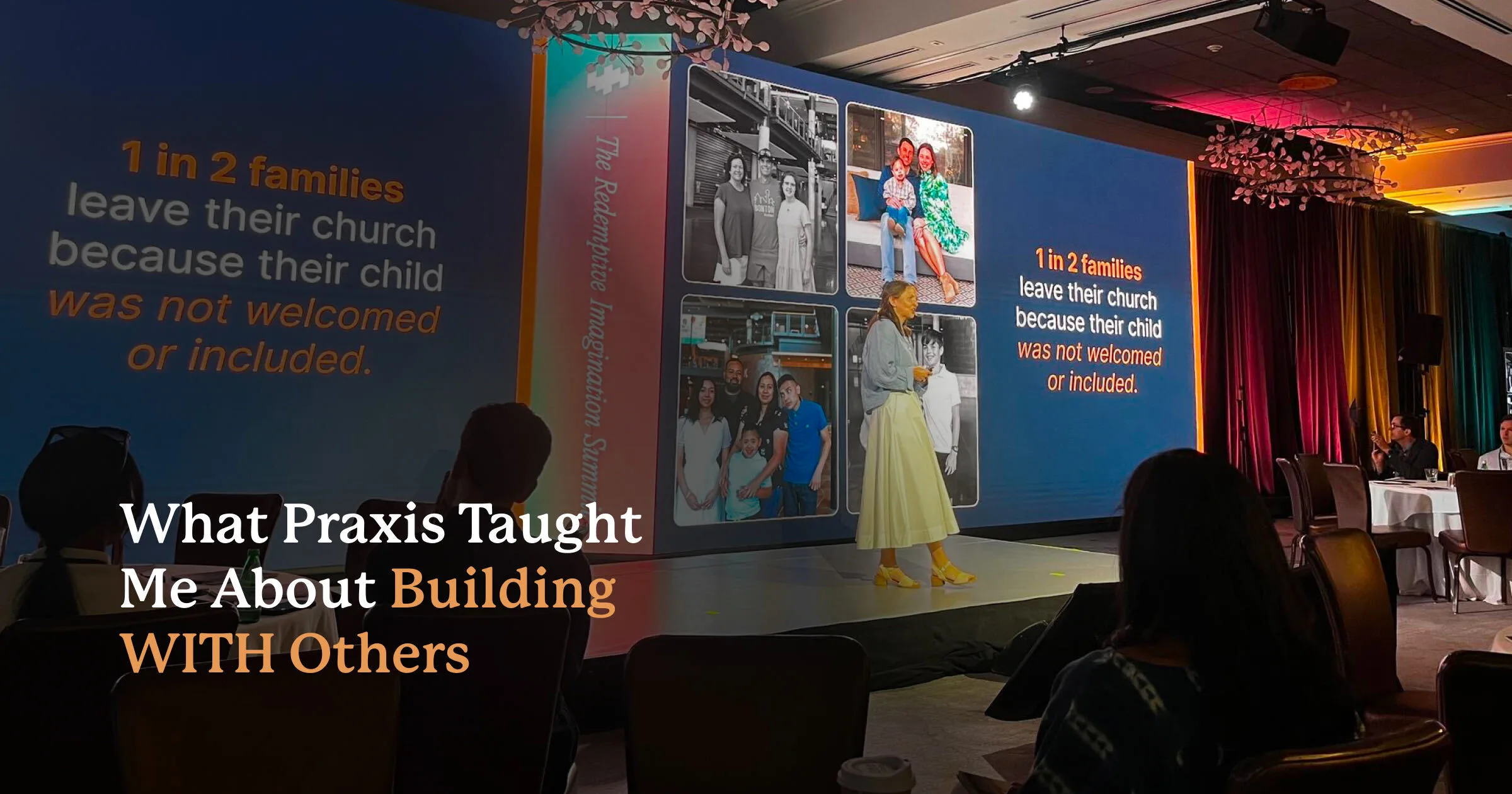
For WITH, we know the stories. Families affected by disability have told us about feeling overlooked, separated, or wounded by church experiences. We know there are barriers to accessibility and participation. We know too many people are still missing from our pews, our tables, our ministries, and our communities.
But redemptive imagination asks us to do more than critique what exists.
It asks: What could be?
What if churches became some of the most accessible, participatory, and welcoming communities in the world?
What if people with disabilities weren’t simply accommodated, but recognized as essential members of the Body of Christ?
What if we stopped asking people to fit into the communities we’ve already created and began building communities shaped by the gifts of everyone within them?
What if belonging became ordinary?
Those questions have shaped so much of our work at WITH this year. And Praxis helped me see even more clearly that changing the conversation requires us to create something different.
There are lessons from this year that I don’t want to forget.
I’ve learned that carrying a prophetic message into the world requires grit. Sometimes it requires a willingness to be misunderstood. And always, it requires the daily surrender of our ambitions to God.
I’ve been reminded to be fiercely truthful about both the ambitious possibility of the mission and the obstacles standing in its way.
I’ve learned again that principles and practice cannot be separated. What we say we believe about dignity, belonging, accessibility, and the Body of Christ has to become visible in how we build our churches, organizations, programs, relationships, and communities.
I’ve witnessed the profound creativity of God through founders imagining solutions to some of the world’s most difficult problems.
I’ve been reminded not to stop praying with people.
And perhaps one of the hardest and most freeing lessons for a builder: I do not have to manufacture everything this mission needs. I can rest in the assurance that God will provide the people, relationships, ideas, and resources necessary for the work He has called us to do.
That lesson feels especially meaningful as I think about where WITH is headed next.
My Praxis fellowship may be ending, but the work it helped sharpen is not.
We are continuing to invite the Church into a different story, one in which disability inclusion isn’t treated as a program on the margins of ministry, but belonging is woven into the culture of the church. One in which we don’t simply say, “You belong here,” but practice the kind of faithful actions, again and again, that make belonging true.
There are still questions to answer. There are still things to build. There are still churches to equip and conversations to change.
But I leave this experience more convinced than ever that people are ready for a different story.
And I leave knowing that none of us were meant to build that story alone.
Praxis was life-changing and life-giving. I am deeply humbled to have been part of this community and grateful for every mentor, founder, conversation, prayer, challenge, and moment that shaped this year.
I entered Praxis believing it would be a catalyst for WITH.
And it was.
And in ways I couldn’t have anticipated, it reminded me why the word with matters so much in the first place.
I’m leaving this year deeply grateful for what has been and expectant for what God will do next.